Think Your Windows Are Fine? Let’s Find Out.
Windows don’t usually “fail” overnight — they get tired. 🥱 Over time, seals break, frames shift, and what used to be your cozy living room starts feeling more like a wind tunnel. Here’s how to find out if your windows are still keeping up — or if it’s time to send them into retirement.
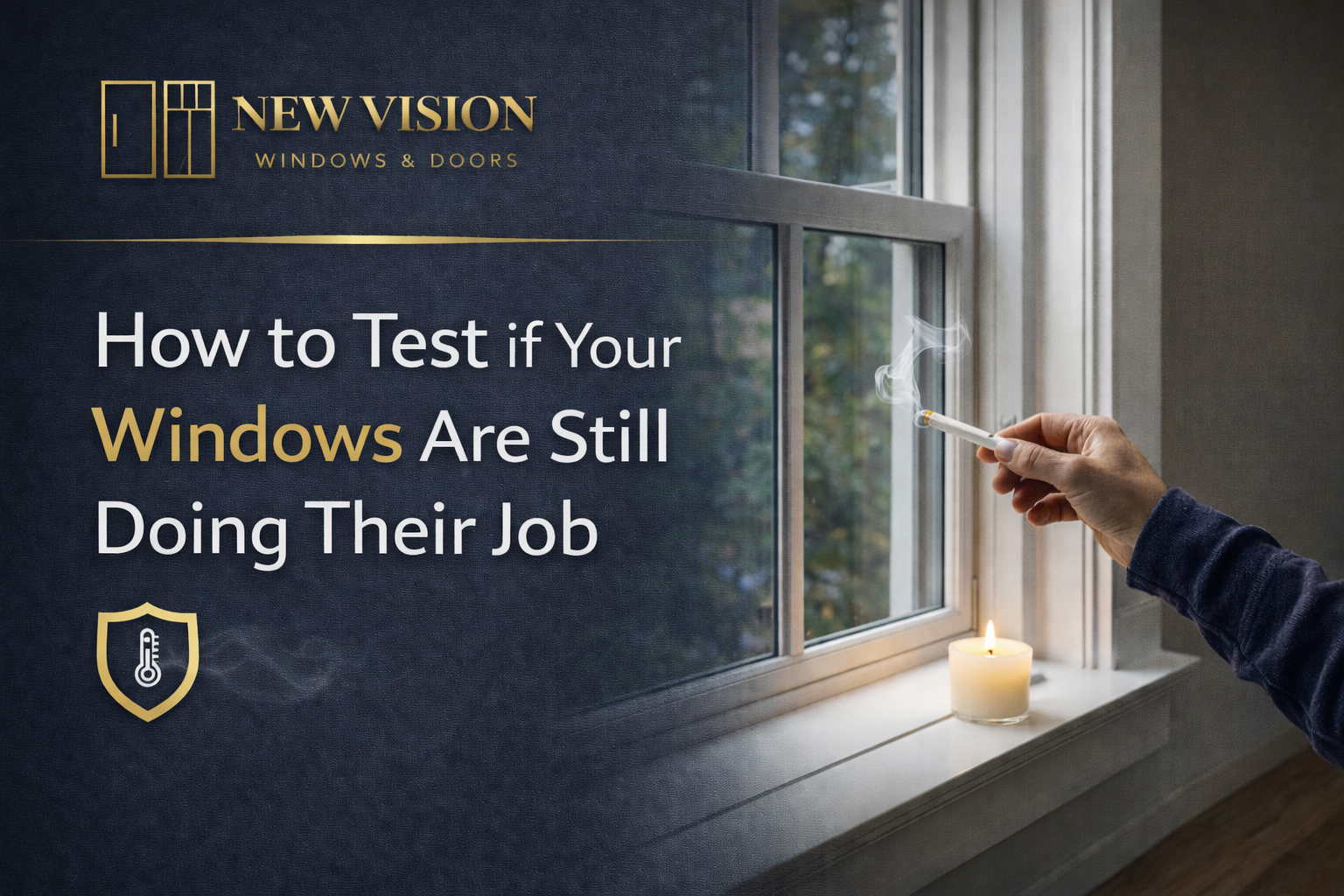
1. The Candle or Incense Test 🕯️
Grab a candle or stick of incense and slowly move it around the edges of your window. If the flame flickers or the smoke blows, congratulations — you’ve found a draft. And a new way to waste money on heating and cooling. 💸
2. The Hand Test ✋
On a windy day, run your hand along the edges of your closed window. Feel a chill? That’s not “good airflow.” That’s your hard-earned energy literally leaving the building.
3. Fog or Condensation Between Panes 🌫️
If your windows look like they’ve been crying from the inside, that’s a bad sign. Moisture between panes means the seal has failed — and your insulating gas (argon or krypton) is long gone. At that point, your window is basically just fancy glass.
4. Difficulty Opening or Closing 🪟
Windows shouldn’t feel like a gym workout. If you have to brace yourself to open one or wiggle it just to get it to lock, it’s warped or swollen — a classic sign of aging vinyl or wood frames.
5. Outside Noise Check 🔊
Stand near the window while someone mows the lawn or a car passes by. If it sounds like they’re in the room with you, your window’s sound insulation is toast. (Psst — we have a blog about that too.)
6. Rising Energy Bills 💡
If your energy bills are climbing faster than your thermostat, your windows might be the culprit. Drafty or inefficient windows let temperature changes in faster than your HVAC can compensate for.
Bonus: The “Neighbor’s House Test” 🏠
Look out your window at your neighbor’s — if you’re jealous of how clear and clean theirs look, it’s time for new ones.
So… How’d They Do?
If your windows failed two or more of these tests, it might be time for an upgrade. Modern vinyl and fiberglass windows are incredibly energy efficient, reduce outside noise, and can even improve your home’s curb appeal (and value). Plus, no more candle testing every winter.